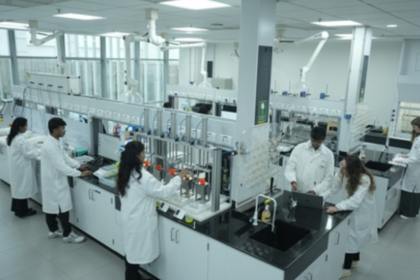
The new plan backs researchers to seize on new and developing opportunities to phase out animal tests
Science minister Lord Vallance has unveiled plans to phase out animal testing faster under a new strategy to deliver on the government’s manifesto commitment. The roadmap equips researchers to seize new and emerging opportunities in specific animal tests, which are still used, where necessary, to determine the safety of products such as life-saving vaccines and the impact that chemicals like pesticides can have on living beings and the environment.
The plan recognises that phasing out the use of animals in science is only possible where reliable and effective alternative methods, with the same level of safety for human exposure, can replace them. By working with partners, backing researchers with new funding and simplifying regulation, the strategy hopes to enable teams to pivot safely to methods such as:
- Organ-on-a-Chip systems are tiny devices capable of mimicking how human organs work by using real human cells.
- Increased use of AI to analyse vast amounts of information about molecules to predict if new medicines will be safe and work effectively for humans.
- 3D bioprinted tissues could create realistic human tissue samples for testing, providing lifelike environments for studying human biology and assessing the toxicity of substances.
The plan established a commitment to end regulatory testing on animals to assess the potential for new treatments to cause skin and eye irritation and skin sensitisation by the end of 2026. By 2027, researchers are expected to end testing the strength of Botox in mice and to use only DNA-based lab methods for adventitious-agent testing of human medicines. By 2030, it will also decrease pharmacokinetic studies on dogs and non-human primates.
The government has developed the plan with consultation from life sciences experts, businesses and animal welfare organisations. The plan will deliver on the government’s manifesto commitment to better animal welfare by partnering with scientists, industry, and civil society to phase out animal testing.
Vallance said, “Nobody in our country of animal lovers wants to see suffering, and our plan will support work to end animal testing wherever possible and roll out alternatives as soon as it is safe and effective to do so. This is a roadmap which will ensure government, businesses and animal welfare groups can work together to find alternatives to animal testing faster and more effectively.”
The Strategy is supported by £60m in funding, to be used to create a hub that brings together data, technology and expertise to facilitate collaboration between researchers, and a separate centre to develop a path to regulatory approval for new alternatives as straightforward as possible.
£15.9 has also been committed by the Medical Research Council, Innovate UK, and the Wellcome Trust to accelerate ‘human in vitro models’, including Organ-on-a-Chip systems, enabling researchers to test how drugs affect people without using animals and to discover results more relevant to humans. Five teams across the UK will be focusing on human in vitro models of the liver, cancer, brain, blood vessels, and pain.
The government has also expressed commitment to supporting validation to ensure scientific and technical advances can accelerate the transition away from animal use.
A committee, chaired by Vallance and involving other government ministers nd departments, regulators, and funders, will oversee the strategy, and performance indicators will be released next year to monitor progress.
Other commitments within the strategy include:
- Providing foundational training in alternative methods for early-career researchers from 2026.
- Publishing lists of research priorities for alternative methods at least every two years, beginning in 2026.
- Reinforcing the commitment of research funders to alternative methods and the greater visibility of available alternatives.