A look at the ongoing progress and transformation of the battery technology industry
A battery’s materials are critical to its performance as they directly affect factors such as energy density, efficiency, safety and cycle life.
For example, the choice of anode and cathode materials determines how much energy a battery can store, how quickly it charges and how long it lasts before degrading.
The thermal and chemical stability of materials also influences safety, making material selection vital for developing efficient, durable and safe batteries.
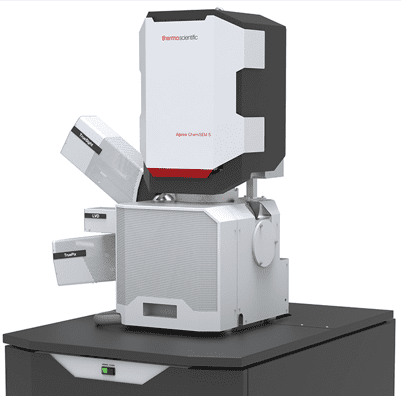
Here Dr Zhao from Thermo Fisher Scientific explores the current trends in battery technology and how electron microscopy can ensure they are efficient and sustainable.
In-depth materials analysis, such as Electron Microscopy (EM), is essential to understanding a material’s microstructure and how it behaves during electrochemical cycling.This helps researchers detect failures such as dendrite formation or cracking that can lead to battery failure.
Microscopy also allows for the optimisation of the interfaces between battery components, improving ion transport and performance. Ultimately, by analysing materials at the atomic level, scientists can develop batteries that are safer, more efficient and longer-lasting.
Delivering new techniques
Materials characterisation and analysis play a vital role in every phase of battery development, from the initial research and design of new materials to manufacturing, quality control, failure analysis and, ultimately, recycling.
Emerging technologies, such as lithium-metal and solid-state batteries, offer substantial potential for transforming the energy storage landscape. These innovations promise higher energy density, extended cycle life and enhanced safety over traditional lithium-ion batteries. However, to fully realise these advantages, significant research is required to overcome persistent technical challenges.
For instance, lithium-metal batteries, while capable of achieving high energy densities, face issues like dendrite formation – a growth of needle-like lithium structures that can pierce the separator, potentially leading to short circuits and safety hazards. Similarly, solid-state batteries offer enhanced safety by replacing flammable liquid electrolytes with solid ones, but they introduce complex interfacial challenges. Effective performance demands precise alignment between the solid electrolyte and electrode materials, and controlling degradation at this interface is essential to prevent premature failure.
Characterising these advanced materials is challenging owing to the highly reactive nature of key components, such as lithium metal anodes, solid electrolytes and the solid electrolyte interface. These materials can degrade or alter upon exposure to air and moisture, making it difficult to preserve their native state for accurate analysis.
Solutions such as the Thermo Scientific Inert Gas Sample Transfer (IGST) workflow can help with these issues. This workflow combines multiple electron microscopy techniques in a controlled environment, enabling researchers to examine battery materials in their native state down to the nanometre scale. By transferring samples in an inert gas atmosphere, IGST effectively preserves the integrity of reactive materials, allowing for more reliable and repeatable characterisations.
These detailed analyses help researchers gain insights into degradation mechanisms, improving material design, and ultimately accelerating the commercialisation of next-generation battery technologies.
A full lifecycle approach
The analytical solution overall is central to ensuring compliance with new regulations and supporting the sustainability of the market. From January 2026, EV and industrial batteries in the EU will have to comply with the EU Battery Regulation Amendment. Regardless of the battery’s origin, a digital ‘passport’ will be required for it to be listed in the European market. The regulation aims to help protect the environment, ensure a reduction in the amount of hazardous waste and drive circular growth in the industry. But its arrival lands responsibility directly on the shoulders of the party placing the battery on the market, to ensure that all required data is entered in the digital record and that this information is correct and up to date.
Battery manufacturers must therefore demonstrate that all contaminates and trace elements used across the production value chain align with the specifications and quality standards outlined in the battery passport. Achieving this will require not only sophisticated microscopy, spectroscopy, and spectrometry technology for material verification but also an integrated, comprehensive analysis strategy to authenticate material quality and origin throughout the supply chain.
For more information visit: www.thermofisher.com