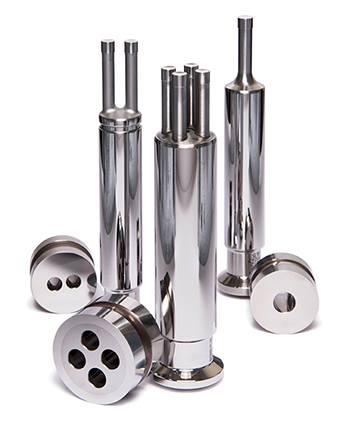
Ordering tablet compression tooling doesn’t have to be a daunting task. Suppliers often request detailed specifications you might not have readily available, and tracking down those answers can be time-consuming.
To take the guesswork out of the process, tablet tooling can be broken down into three categories:
- 1. Tablet identification: Basic dimensions, shape, score lines, and embossing details.
- 2. Tooling steel type and options: Material selection, coatings, and specific design configurations.
- 3. Equipment details: The tablet press manufacturer and the total number of stations on the press.
Category breakdown
1. Tablet Identification
This category defines the physical geometry, appearance, and physical properties of the final tablet you want to produce.
- Dimensions and shape: Specify whether the tablet is round, capsule-shaped, oval, or an irregular/custom shape, along with precise measurements (diameter, length, width, and overall thickness).
- Break-lines (score lines): Indicate if the tablet requires a score line for breaking, whether it is single-scored, double-scored, or plain, and if it needs to be on one side or both.
- Embossing and logos: Provide artwork files, text, or letters/numbers that need to be debossed or embossed onto the tablet face. Suppliers will evaluate if the character size is feasible relative to the available tablet surface area.
- Target weight: The target weight is helpful and can be etched on the neck of the punch and face of the die for tool and product identification.
2. Tooling steel type and options
The material composition of the punches and dies directly dictates how long the tooling will last and how well it handles difficult formulations.
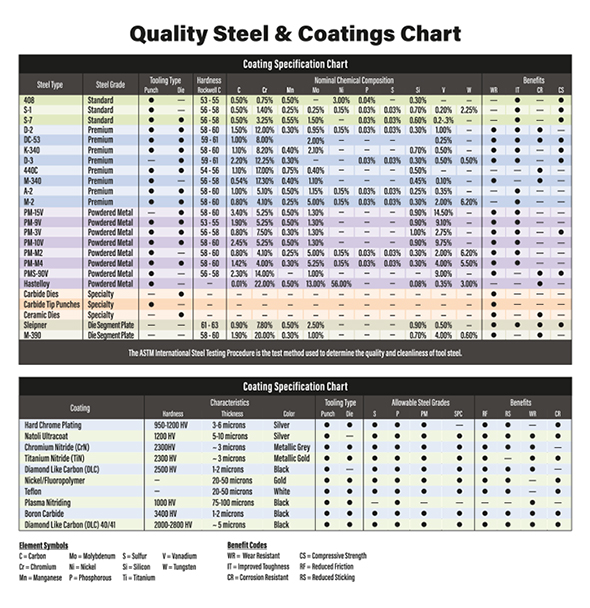
- Tool steel grade: High-grade carbon tool steels (like S7) offer baseline shock resistance, while premium steels which are considered Chromium steel due to their high percentage of chrome. such as and powder metallurgy (PM) steels and tungsten carbide are chosen for abrasive high-wear products and extended run applications.
- Coatings and treatments: Specialized surface treatments (such as hard chromium plating or titanium nitride [TiN]) help prevent sticking, picking, or binding issues with corrosive and abrasive formulations.
- Tooling standard design: Specify whether you are adhering to TSM (Tablet Specification Manual, predominantly North America) or EU / ISO standards, as punch lengths and head profiles differ.
- Special options: Indicate if you require multi-tip tooling, dust cup barrel grooves, rotating heads, or specialised keyed barrels to prevent punch rotation and tapered dies.
3. Tablet press manufacturer and station count
Tooling must be mechanically compatible with your exact rotary press. Cam tracks, head configurations, and keyway orientations can vary drastically between brands.
- OEM and model number: The exact brand and model of your tablet press (e.g., Korsch, Manesty, Fette, Kilian, Bosch, Natoli).
- Number of stations: The total number of stations (dies) on the press turret (e.g., 16-station, 37-station, 45-station).
- Tooling class size: Clarify whether the machine utilises BB, B, D, or DB standard tooling classes or is a non-standard unique tool configuration not recognized by a standard.
The industry standard: The Tableting Specification Manual (TSM)
Navigating these categories is significantly easier with the right reference material. The Tableting Specification Manual (TSM)—published by the American Pharmacists Association (APhA) and available in its comprehensive 8th Edition—is universally recognised as the ultimate ‘bible’ for solid-dose manufacturing.
The TSM serves as the definitive industry guide for North American tooling standards, establishing universal terminology, precise interchangeability parameters for classes like B and D tooling, guidelines for optimal tablet and tool design, and exhaustive troubleshooting checklists for floor-level production issues.
Where to purchase:
The Tableting Specification Manual (8th Edition) can be purchased directly through your tooling supplier or the American Pharmacists Association (APhA) Bookstore website (pharmacist.com).
Stay within the standards
Unnecessary deviations from standard tooling designs add cost without improving tool longevity, tablet quality, or press performance. In most cases, these non-standard requests happen simply because users aren’t aware that an industry standard exists. To keep tooling costs low, ease inspection procedures, and make troubleshooting straightforward, we strongly recommend adhering to published standards whenever possible.
Conclusion
Ordering tablet compression tooling doesn’t have to be complicated. Having the right information available at the beginning, what the tablet looks like, how it needs to be made, and what press it will run on gives your tooling supplier a strong starting point for developing the correct tooling.
You don’t need to know every tooling specification before placing an order. Providing the basic tablet dimensions and design, along with the tooling options and press information outlined in this guide, allows your tooling supplier to help determine the details needed to complete the order.
The more complete the information is upfront, the fewer questions, revisions, and delays are likely to occur. A little preparation before submitting a tooling request can go a long way toward making the entire process faster, easier, and more efficient.
For more information visit: www.natoli.com