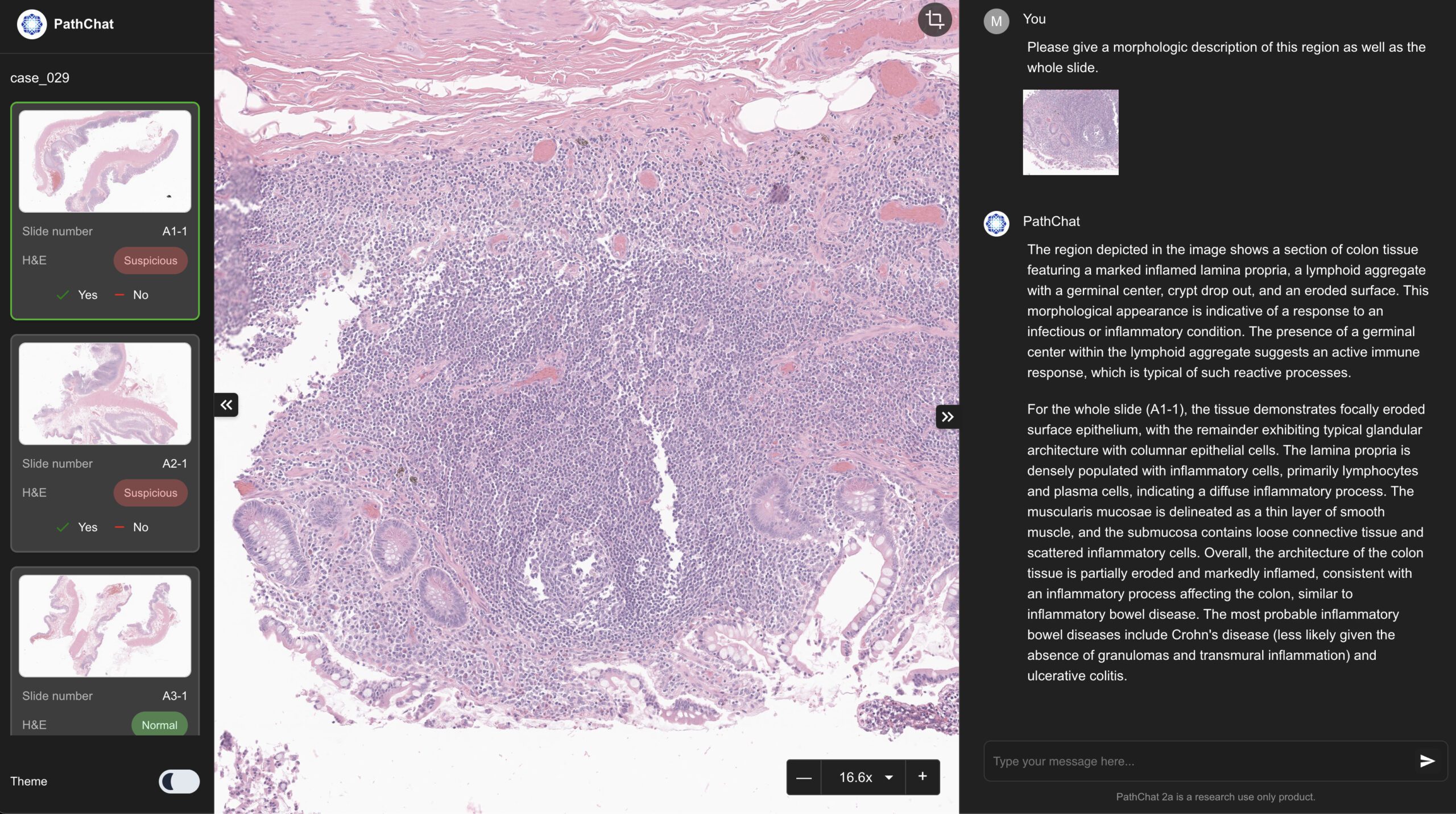
The generative biomedical AI co-pilot can analyse high-resolution pathology images and clinical data
Biomedical artificial intelligence company Modella AI has received FDA Breakthrough Device Designation for its generative biomedical AI co-pilot PathChat DX.
PathChat DX is an extension of the PathChat model developed by computational pathology centre Mahmood Lab.
"PathChat DX represents a transformative step forward for pathologists at every stage of their career. By enhancing diagnostic precision and potentially accelerating the time to diagnosis, it addresses critical needs in patient care, where timely and accurate decisions directly impact treatment outcomes," said Modella AI scientific advisor and surgical pathologist of the University of Texas MD Anderson Cancer Centre Dr Alexander Lazar.
"With the rising demands and challenges in pathology, including growing workloads and burnout, tools like PathChat DX offer an opportunity to help pathologists improve both their efficiency and resilience in our complex field."
PathChat DX integrates advanced generative AI and multimodal analysis to enhance diagnostic workflows and improve patient outcomes in pathology.
To analyse high-resolution pathology images and clinical data, PathChat DX harnesses a combination of pathology foundation models pre-trained on histology image and image-text datasets, as well as a custom-trained multimodal large language model (MLLM).
The FDA Breakthrough Device Designation is for medical devices that provide significant advantages over existing standards of care, addressing unmet medical needs or providing critical healthcare advancements.
Modella AI will receive prioritised FDA review and increased collaboration with the agency.
"The Breakthrough Device Designation is a testament to the transformative potential of PathChat DX as one of the first generative AI tools specifically trained for human pathology," said Modella AI CEO Dr Jill Stefanelli.
"This milestone brings us closer to our mission of using generative and agentic AI to accelerate diagnostic workflows."