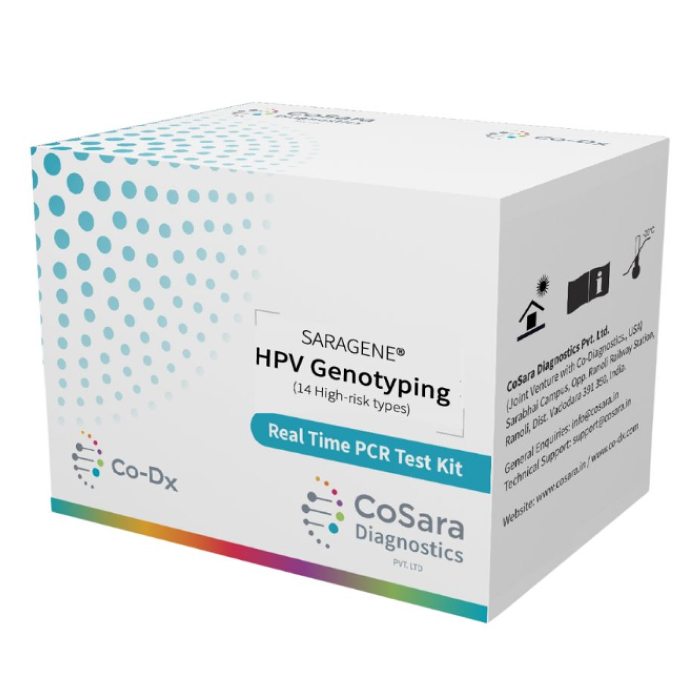
Molecular diagnostics company Co-Diagnostics Inc. has published a peer-reviewed study using the Saragene Human Papillomavirus High Risk (HPV-HR) test manufactured by CoSara Diagnostics Pvt. Ltd., the company’s joint venture in India.
“Expanding access to molecular HPV testing is an important part of strengthening cervical cancer screening, particularly in regions where access to diagnostics remains limited,” said Co-Diagnostics CEO Dwight Egan.
The study is titled “Cross-sectional assessment of high-risk HPV prevalence, genotype distribution and associated socio-behavioural correlates among women in Central Gujarat, India”. It was conducted by investigators at a local institution in Gujarat, India and published in Infectious Agents and Cancer. The results highlight the potential role of molecular HPV testing in identifying women who warrant further evaluation, even when cytology results are negative.
Investigators used the Saragene HPV-HR testing to screen samples from 625 women aged 30 to 60. The Saragene HPV-HR test is a wet-reagent, laboratory-based multiplex real-time PCR assay that detects HPV-16, HPV-18 and a pooled group of 12 additional high-risk HPV genotypes.
“We are excited to see CoSara’s Saragene test used in published research that brings the importance of molecular screening into such clear focus, said Egan. “Our goal through CoSara is to make high-quality, affordable molecular diagnostics more accessible to laboratories and clinicians across India and South Asia.”
Samples were collected through hospital and community screening settings. A total of 20 women tested positive for high-risk HPV; 18 had cytology results reported as negative for intraepithelial lesion or malignancy (NILM), while two had low-grade squamous intraepithelial lesions (LSIL). Subsequent colposcopy and directed biopsy identified high-grade cervical lesions in nine women and invasive cervical carcinoma in three.
The report comes as international efforts increasingly focus on expanding access to HPV-based cervical cancer screening. In July 2026, the World Health Organisation issued guidance to help countries implement and scale HPV DNA-based screening programmes.