How a new pipette helps to make frequent laboratory use more comfortable
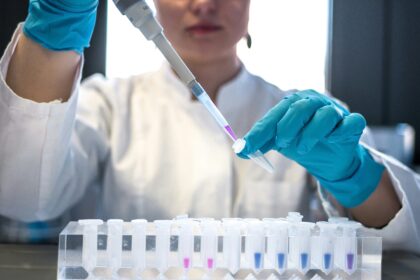
Pipetting is one of the most frequent tasks in life sciences laboratories, yet its physical demands are often underestimated. An hour of pipetting involves up to 1,000 repetitive movements of the thumb and wrist, frequently in situations requiring awkward postures. Over time, the combination of repetition, force and constrained positioning can lead to musculoskeletal discomfort affecting the wrists, thumb, shoulders and neck. In high throughput environments, stresses can accumulate, reducing productivity and contributing to chronic health conditions.
A recent research collaboration between Integra Biosciences and Zurich University of Applied Sciences (ZHAW) examined pipetting from a biomechanical perspective, aiming to define the ergonomic parameters that should be considered when designing liquid handling instruments to ensure user comfort and health.
What influences the ergonomic comfort of pipettes?
The research identified several recurring stress factors in pipetting. These included repetitive thumb flexion and abduction when aspirating and dispensing, sustained muscle loading throughout the arm, joint stress in the thumb, and radial deviation of the wrist. Over time, these stresses accumulate, leading to issues such as tendonitis, carpal tunnel syndrome and neck or shoulder pain. Rather than focusing on single parameters, the study emphasised that ideal ergonomics require a more holistic approach to design. Manufacturers therefore need to pay close attention to handle geometry, plunger mechanics, instrument weight and the overall workflow efficiency when designing pipettes.
Designing with ergonomics in mind
Optimising ergonomics requires careful consideration of both weight and shape. Weight needs to be low enough to allow continuous use and balanced to ensure the pipette is comfortable to operate – spreading the load throughout the wrist and forearm – even during long pipetting sessions.
The geometry of the pipette also plays a key role, with ergonomic guidance stating that handle lengths should be between 6.6 to 11 cm, and diameters between 3 and 4 cm, to ensure a comfortable, secure grip. For example, undersized handles increase local muscular effort – especially during extended sessions – due to an unnatural distribution of grip forces, increasing compensatory muscle activity. Surprisingly, ZHAW’s research into pipette ergonomics revealed that several widely used manual pipettes fall outside of these recommended ranges along at least one axis.
Another consideration is plunger height. Traditional manual pipettes typically have variable plunger height depending on the selected volume. This means that the thumb may be forced to overextend at larger volumes while, at lower volumes, awkward flexion angles can be required. Both scenarios increase stain on the thumb’s saddle joint. Even at comfortable volumes, many manual pipettes require a substantial amount of force to depress the plunger, with forces of up to 17.5N found to be required in the ZHAW study. In contrast, novel pipette designs with consistent plunger heights enable lower actuation forces and a more natural grip, reducing the cumulative strain over lengthy pipetting sessions.
New features to improve ergonomics and workflow efficiency
Although alterations in design can improve ergonomics for carrying out repetitive tasks, minimising repetition – or eliminating it altogether – offers far greater potential for improvement. For example, volume adjustment on many traditional pipettes relies on rotation of the plunger, forcing the user to repeatedly rotate their wrist. Innovative volume setting techniques and electronic components can reduce the amount of rotation needed for large volume changes.
Another area where repetition can be minimised is protocols requiring repeat dispensing of identical volumes of reagents into each well of a plate, such as ELISAs or RT-qPCR set-up. When using a standard single channel pipette, this necessitates returning to the stock solution for every liquid transfer to aspirate. Repeater pipettes overcome this issue, but have historically been large and cumbersome, increasing the strain on the user. New technologies are now enabling repeat dispense functionality to be built into manual pipettes, creating a hybrid solution that allows multiple aliquots to be delivered from a single aspiration. In controlled comparisons, this feature halved the time to dispense 10 aliquots compared to separate aspirations.
Applying the research to create the ideal pipette
The research conducted by ZHAW assessed Integra’s Switch hybrid pipette according to the parameters discussed above, to determine how its design aligns with established ergonomic standards. The pipette’s shape is carefully crafted for maximum ergonomic comfort, fitting within the ideal parameters for diameter and length. The plunger remains at a constant height regardless of volume and requires significantly less force to operate than a traditional manual pipette. It also allows repeat dispense technology to be integrated within the body of a conventional pipette for fewer repeat movements.
More broadly, this study underlined that all manufacturers should ground product development and evaluation in objective ergonomic evidence, ensuring that innovation is guided not only by performance metrics, but also by reducing user strain. Handle geometry, plunger height, actuation force, weight distribution and workflow efficiency interact to determine overall musculoskeletal load, and improvements must be spread between all parameters to ensure comfortable long-term use.
For more information visit: www.integra-biosciences.com

How to push the Switch plunge