New Phesi data shows 6.7% of global clinical trials impacted by Middle East disruption
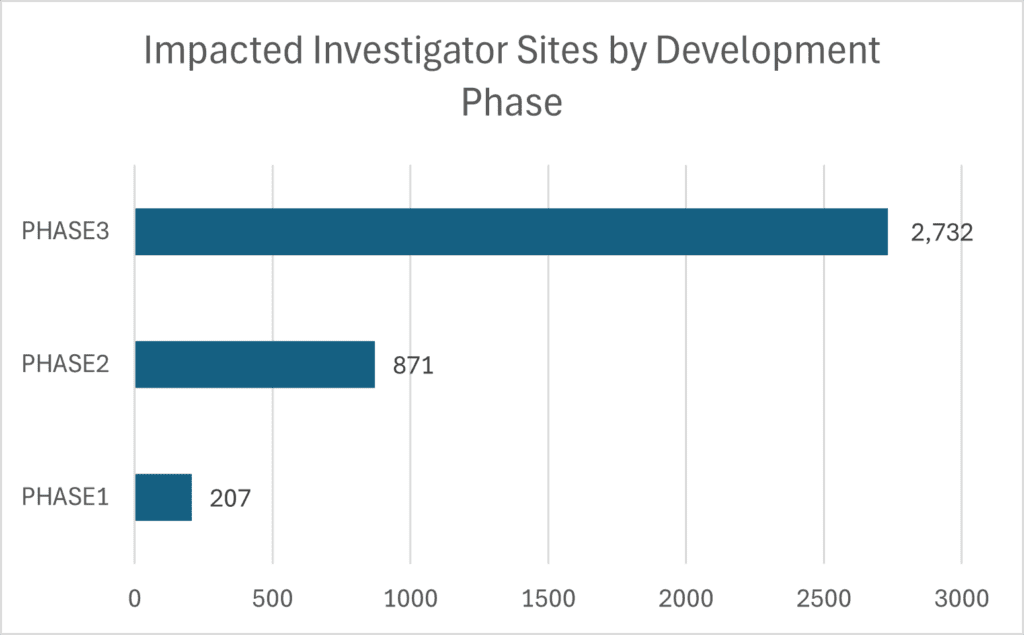
New analysis from research company Phesi of 65,061 globally recruiting clinical trials across 186 countries finds that 4,361 studies, equivalent to 6.7% of all active trials, are impacted by disruption in the Middle East. Across a total of 356,699 recruiting investigator sites, 7,958 (2.2%) are in the affected region, with Phase III trials accounting for the highest number of impacted sites (2,732) (fig.1).
Geographically, the highest number of affected sites are located in Turkey, Israel and Egypt (fig.2). Oncology trials account for a substantial proportion of impacted activity, with non-small cell lung cancer representing the most affected indication, followed by breast cancer. Additional impact is seen across conditions including heart failure, multiple myeloma and Crohn’s disease.
“Clinical development has become deeply interconnected. When disruption occurs the impact extends beyond individual sites, particularly in high-priority disease areas such as oncology,” said Dr Gen Li, founder and CEO, Phesi. “The impact on Phase III trials is particularly significant, as these later-stage studies involve larger, committed patient populations and represent years of investment. Patient safety and the safety of investigators and clinical staff must remain the primary consideration, alongside the need to keep existing trials going.”
Phesi’s analysis also finds that large pharmaceutical companies have a substantial footprint in the region. All top 10 global pharma companies have considerable numbers of investigator sites in affected countries; some organisations are particularly exposed with between 400 and 500 sites. This level of exposure means regional disruption can have far-reaching implications for global trial delivery, underlining the importance of maintaining continuity in rapidly changing conditions.
“Disruption and uncertainty are becoming a structural feature of clinical development. The priority is not only to respond, but to proactively use data to understand exposure and mitigate risk,” continued Dr Li. “Such periods of disruption reinforce the need for a precise, data-driven approach to development. Sponsors need to quickly understand their exposure, identify alternatives and adapt trial strategies in real time, while maintaining high standards of patient safety and data integrity. There is also an opportunity to explore approaches such as external control arms and modeling techniques, including digital twins, particularly in well-characterised disease areas.”