This method could sustainably develop medical and laboratory supplies while addressing waste sulphur
Researchers from Xi'an Jiaotong University have developed a way to transform industrial waste sulphur into dynamic, sulphur-rich polymers, which can be used to create items such as medical devices.
"This work provides a facile strategy for the development of dynamic sulphur-rich polymers by a mild synthetic route,” said leading researcher at Xi'an Jiaotong University Professor Yan-Feng Zhang.
“It not only addresses the issue of waste sulphur disposal but also opens new avenues for the design of smart materials with advanced dynamic properties."
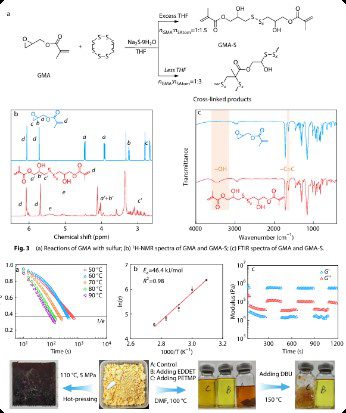
The researchers synthesised sulphur-rich polymers by reacting elemental sulphur with low-cost epoxide monomers at an ambient temperature.
High temperatures, which are traditionally seen in methods such as inverse vulcanisation, are energy-intensive and results in the release of unpleasant odours.
The researcher’s synthesis resulted in polysulfide polymers with dynamic properties that allow the polymers to recover from physical damage and reprocessing.
The polymers can also be chemically degraded, making them more environmentally sustainable and potentially more customisable.
The ability for the polymers to be reprocessed and altered could be useful throughout the plastics industry, helping to create items such as medical devices, sensors and bioresorbable implants.
Additionally, self-healing coatings could automatically repair damage to laboratory equipment, extending the lifespan of products.