This microscope is optimised for fully automated preparation of transmission electron microscopy (TEM) samples (lamellae).
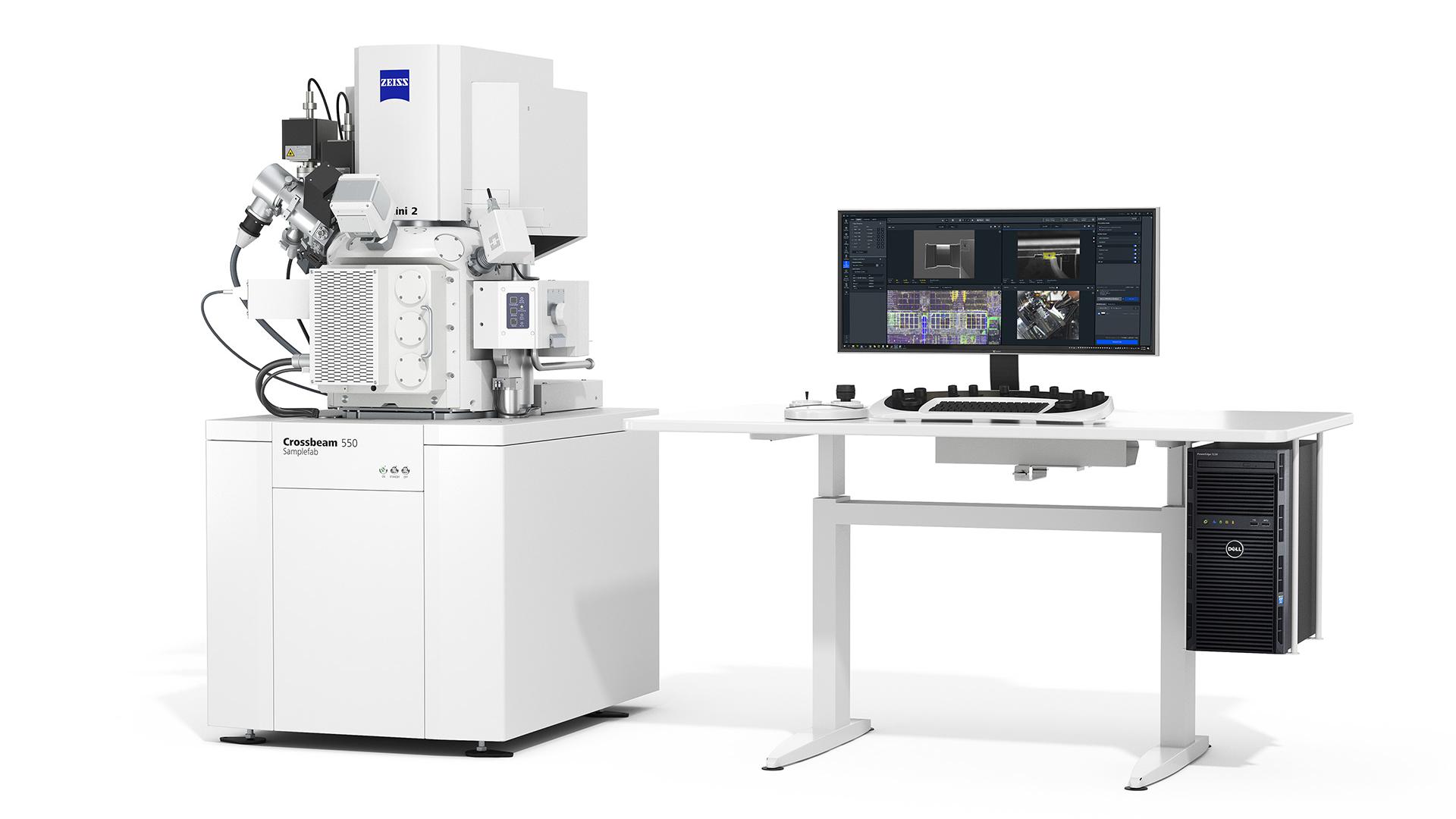
German manufacturer Zeiss has launched the Crossbeam 550 Samplefab, a focussed ion beam scanning electron microscope (FIB-SEM).
The microscope is optimised for fully automated preparation of transmission electron microscopy (TEM) samples (lamellae). This includes bulk milling, life-out and thinning at target points on the sample.
“Our focus is to offer the most robust automation available on the market today, allowing fully unsupervised operation of down to 100nm thin lamellae with high accuracy and throughput,” said the head of business sector electronics of Zeiss Dr Thomas Rodgers.
“Customers can automatically process ten lamellae in under eight hours, starting from a bulk sample and ending with a thinned lamella ready for the TEM.”
TEM imaging enables operators to understand semiconductor device defects.
Automation allows for more efficiency and a balanced distribution of work. Operators can expect an automation yield of at least 90% for processing lamellae from bulk to TEM grid.
“The system’s user interface is completely new, designed for a rapid learning curve and intuitive operation by both novices and experts,” added Rodgers.
Operators can still step in to ensure no lamellae are lost during process, increasing the yield further.
Operators can also observe the live sample through the microscope’s Gemini 2 electron column to monitor quality and create thinner samples than automation offers if needed.
“Our FIB column is extremely stable, and while we have an automated calibration routine, users report rarely needing to calibrate or align the system over multiple weeks, especially if it is working on routine processes,” said Rodger.
With the Crossbeam 550 Samplefab, dozens of lamellae can be created using a single probe tip, which needs reshaping after a few days of heavy use. The tip can be sharpened with a simple reshaping operation that takes under 30 minutes.
The needle can be reshaped multiple times before needing to be replaced, another process taking 30 minutes.
The long-lasting probe tips and needles, as well as the short replacement time enable lower consumable costs and operator effort.