With in-vitro to in-vivo testing
Following the passing of the FDA’s Modernisation Act 2.0 in 2022, the use of New Approach Methodologies (NAMs), including Organ-on-a-Chip (OOC), is now supported and encouraged by the world’s largest regulator for evaluating drug safety and effectiveness in place of animal testing, where appropriate.
Despite this progress, replacing animals in safety testing is challenging and likely to be slow, since animal models provide many organ-specific readouts that are not fully reproductible in vitro.
However, there are contexts of use where OOC data can be used to supplement animal data and improve safety risk assessments through better informed decisions about human-relevant safety – especially for the liver. Most medications are metabolised in the liver, which makes it susceptible to adverse drug reactions.
A publication by Singh et al., 20251 highlights that 55 medications were approved by the US FDA in 2023, with 22 (40%) having evidence of liver toxicity in the drug label or clinical trial results. So, for some, why was DILI only identified in human studies?
Two retrospective reviews found the positive concordance between liver toxicity in animal tests and clinical trials was 55% (Olson et al., 2000)2 and 33% (rats), 27% (dogs), and 50% (monkeys) (Monticello et al., 2017)3. The main reason relates to interspecies differences in drug disposition, however, there are other contributing factors as reviewed by Taylor et al., 20254.
This problem is further exacerbated by newer human-specific drug modalities for which animal testing is less suited. These reasons necessitate the need for pre-clinical toolbox modernisation with NAMs, including OOC, to deliver improved in-vitro to in-vivo translatability (IVIVT).
How OOCs improve IVIVT and how to demonstrate their capability
Human liver-on-a-chip models are utilised to predict and gain a mechanistic understanding of drug induced liver injury (DILI). Their enhanced human relevance provides a means to overcome the limitations of animal models, which can miss some instances of idiosyncratic DILI, plus they provide a viable path forward for new drug modalities. One approach used by OOC vendors to prove their enhanced translatability is by studying flawed drugs that made it to market.
However, unless unsuited, preclinical testing involves testing in animal models. Data discrepancies between human in-vitro and animal in-vivo studies make the final assessment of drug safety in humans challenging. So, do we need to take a step back and more effectively translate data between in-vitro animals and in-vivo animal studies to address this gap?
Regulatory guidelines
In preclinical testing, the drug developer is responsible for the choice of in-vivo species. Factors including the drug target and how closely the animal species mimics human responses influence decision-making, as does previous experience from past trials.
International guidelines specify the use of at least one rodent and one non-rodent species. Rats and dogs are most frequently used in toxicology testing, particularly for small molecules, with non-human primates (NHPs) common for newer drug modalities. All pre-clinical data needs to be reported in regulatory filings.
Use of cross-species OOC for enhanced IVIVT
For this reason, CN Bio has been developing preclinical rat and dog liver-on-a-chip models as translational tools. These tools enable comparative studies to flag interspecies differences early, better inform in-vivo study design and support go/no decision-making. Insights from these advanced in-vitro models help to prevent drugs that are potentially safe in humans from being dropped unnecessarily from the pipeline and de-risk those that weren’t adequately flagged by animals from progressing into preclinical testing.
Sitaxentan, a pulmonary hypertension medication, was removed from the market in 2010 owing to concerns over liver toxicity. A review by Owen et al., 20125 examined preclinical animal species studies where the severity of the toxicity was missed. The authors highlighted that it was not a deficiency in the preclinical package that resulted in the missed toxicity and translational errors; rather, it was a shortcoming of the preclinical species to predict human outcomes, or the mechanistic details of toxicity.
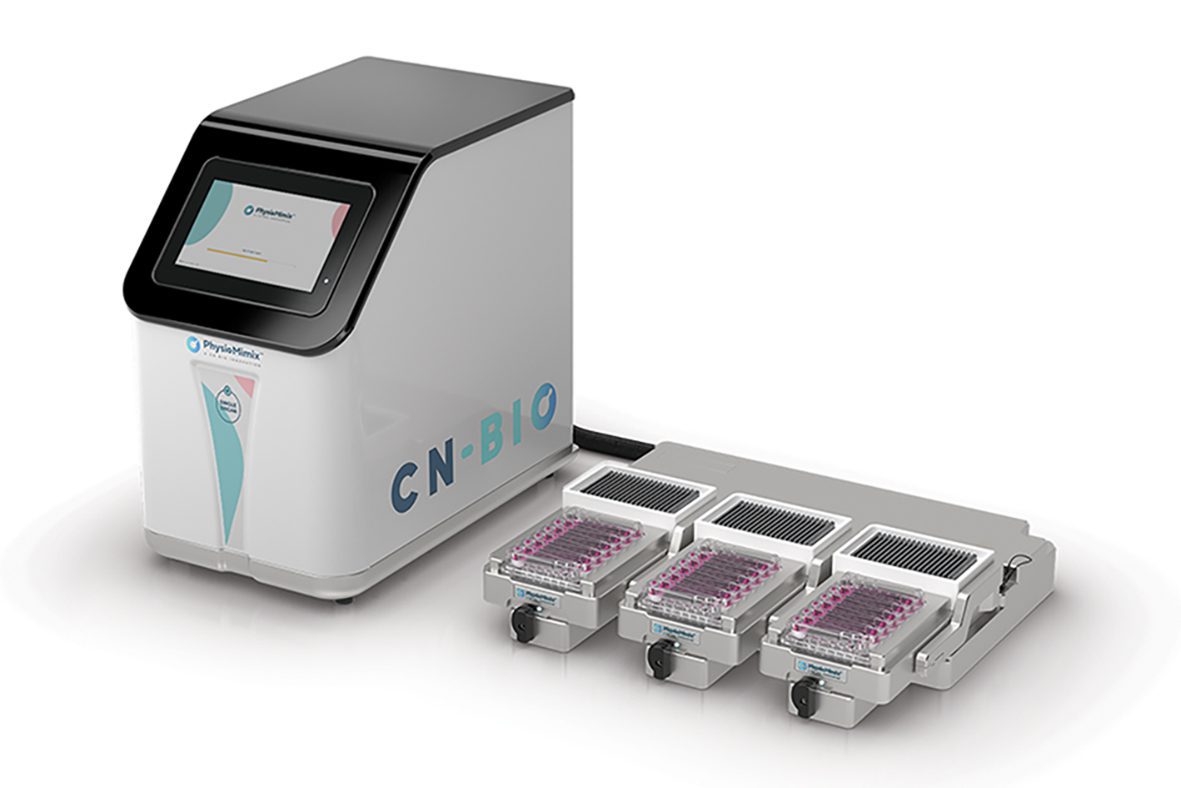
To demonstrate the translatability of cross-species DILI assays, we have been dosing human and cross-species models, cultured using the PhysioMimix Single-organ System and Multi-chip Liver 12 plates, with drugs that have known interspecies differences, including sitaxentan. Leveraging clinical markers, including alanine aminotransferase/ aspartate aminotransferase (ALT/AST), this method provides the ability to rank order drugs by safety risk across commonly used species before the preclinical phase.
Cross-species OOC models align with 3Rs objectives
The approach also supports 3Rs objectives and ethical considerations, including the length of testing required, cost, and availability of models (especially for NHPs). It facilitates the responsible use of animals as hundreds to thousands of in-vitro tests can be performed per donor and their insights safeguard future animal use.
CB Bio continues to qualify these models to further its understanding of the IVIVT potential of these. Sign up to the company’s newsletter via the website below to receive data comparisons when published.
1. doi.org/10.1007/s40264-025-01514-z
2. doi:10.1006/rtph.2000.1399
3. doi:10.1016/j.taap.2017.09.006
4. doi.org/10.3389/fddsv.2025.1536756
5. doi.org/10.1016/j.yrtph.2012.05.017
For more information visit: https://cn-bio.com