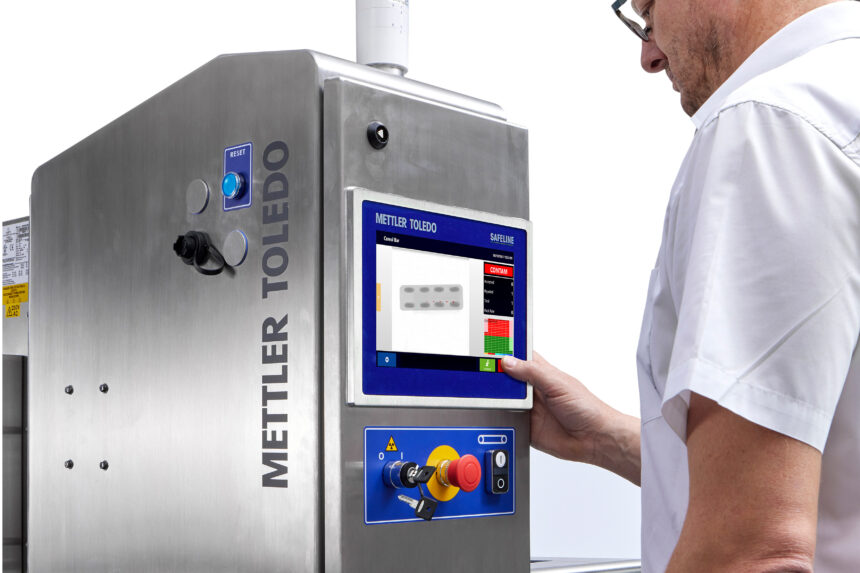
In pharmaceutical manufacturing, inspection plays a critical role in process control to examine individual products, primary packs, or finished cartons, depending on the application. Whether inspecting for physical contaminants, verifying the presence of tablets in a blister pack, confirming the correct assembly of a medical device, or checking the completeness of a sealed carton, x-ray inspection supports a range of quality control processes. This helps manufacturers to assess internal pack conditions without opening or damaging the product. Ultimately, manufacturers can maintain product quality, support brand trust, and meet regulatory requirements in a consistent and auditable way.
How is x-ray inspection used in pharmaceutical manufacturing?
X-ray inspection is an in-line inspection method to detect physical contaminants and conduct a range of quality and integrity checks in pharmaceutical products. By measuring differences in density within a pack, x-ray systems can identify missing components, damaged products, and certain foreign bodies.
In pharmaceutical applications, x-ray inspection is commonly used to verify product presence and pack completeness. This makes it particularly valuable for solid-dose products, sachets, cartons or combination products where completeness is critical. Additionally, in modern medical devices and weight management treatments, such as glucose monitoring sensor systems and weight loss injections, x-ray inspection can ascertain if the needle is broken and reject the pack from the production line.
Why is x-ray inspection used in pharmaceutical production?
Pharmaceutical packaging errors are often small, but their consequences can be significant. A missing tablet, an incomplete kit, or a damaged pack can lead to rejected batches, warning letters or patient complaints. X-ray inspection provides an automated way to identify these issues consistently before products are released.
By acting as a verification step at the end of the line, x-ray inspection helps manufacturers demonstrate control over critical quality attributes and supports compliance with Good Manufacturing Practice (GMP).
Where does x-ray inspection sit on the production line?
X-ray systems are typically integrated at defined inspection points within the pharmaceutical packaging process which can be after filling and sealing. At this stage, the system can assess the finished pack, without interfering with secondary packaging or handling processes.
In typical in-line inspections, such as powder sachet or stick pack applications, x-ray technology is used to identify underfilled or overfilled packs by analysing mass distribution. For tablets and capsules, the technology can detect missing or broken units within blister packs, bottles, or cartons. X-ray is also commonly used to identify open flaps, damaged packaging, or incomplete secondary packs.
Medical devices are inspected in a similar way. Injection systems and needle-based delivery devices, for example, can be checked to confirm the presence and correct assembly of critical components before distribution.
A common question around x-ray technology concerns is radiation exposure. Pharmaceutical x-ray inspection systems operate at very low energy levels and are designed so that neither products nor operators are affected. The inspection process does not alter the chemical or biological properties of medicines or devices.
How does x-ray inspection work in practice?
As products pass through the x-ray system, a controlled beam is directed through the pack and captured by a detector on the opposite side. The resulting image is analysed in real time.
Variations in density appear as contrasts within the image. These are compared against defined acceptance criteria to identify missing items, defects or anomalies. Packs that fall outside tolerance are automatically rejected, while compliant products continue along the line.
What can be checked using x-ray inspection?
X-ray can be applied across a wide range of pharmaceutical products to check for:
· Missing tablets or capsules
· Broken or damaged products
· Incomplete kits or cartons
· Packaging defects such as open flaps or product trapped within the seal
· Presence and correct assembly of medical device components, including needle-based delivery systems and injection devices
· Physical contaminants
These checks provide manufacturers with a consistent way to automatically verify finished product quality.
Compliance, qualification, and data
X-ray inspection systems used in pharmaceutical manufacturing must operate within validated processes and controlled environments. Equipment is supplied with documentation to support qualification activities, including Design (DQ), Installation (IQ), Operational (OQ), and Performance (PQ) Qualification, helping to confirm that x-ray systems are correctly specified, installed, and performing as intended.
These activities support alignment with current Good Manufacturing Practice (cGMP) requirements including 21 CFR Part 211 and applicable data integrity expectations, including frameworks such as EU GMP Annex 11 and FDA 21 CFR Part 11 where relevant.
Inspection data can be securely recorded and retained to support batch documentation, investigations, and audits. This provides manufacturers with clear evidence of process control, traceability, and data integrity across inspection activities, supporting both routine operations and regulatory review.
Benefits beyond compliance
Beyond regulatory requirements, x-ray inspection supports stable and consistent decision-making. By applying the same inspection criteria to every pack, it reduces reliance on manual checks and helps maintain uniform quality decisions across shifts, operators and sites.
This consistency also has a direct impact on waste and rework. By identifying issues reliably before products are released, x-ray inspection helps prevent avoidable reprocessing and unnecessary product waste, supporting more controlled and predictable packaging operations, as well as reducing the risk of costly product recalls.
Conclusion
X-ray inspection provides pharmaceutical manufacturers with a reliable quality control check on the packaging line. By confirming product presence, pack completeness, and packaging integrity before release, it supports patient safety, compliance, and confidence in the finished product.
For more information visit www.mt.com/xr-pharma-basics-pr
activities support alignment with current Good Manufacturing Practice (cGMP) requirements including 21 CFR Part 211 and applicable data integrity expectations, including frameworks such as EU GMP Annex 11 and FDA 21 CFR Part 11 where relevant.
Inspection data can be securely recorded and retained to support batch documentation, investigations, and audits. This provides manufacturers with clear evidence of process control, traceability, and data integrity across inspection activities, supporting both routine operations and regulatory review.
Benefits beyond compliance
Beyond regulatory requirements, x-ray inspection supports stable and consistent decision-making. By applying the same inspection criteria to every pack, it reduces reliance on manual checks and helps maintain uniform quality decisions across shifts, operators and sites.
This consistency also has a direct impact on waste and rework. By identifying issues reliably before products are released, x-ray inspection helps prevent avoidable reprocessing and unnecessary product waste, supporting more controlled and predictable packaging operations, as well as reducing the risk of costly product recalls.
Conclusion
X-ray inspection provides pharmaceutical manufacturers with a reliable quality control check on the packaging line. By confirming product presence, pack completeness, and packaging integrity before release, it supports patient safety, compliance, and confidence in the finished product.