The healthcare industry has made substantial progress in interoperability with Electronic Health Records (EHRs), laboratory systems, imaging platforms, pharmacies, payer networks, and care management applications now exchanging information more efficiently than ever before
Standards such as HL7 and FHIR have accelerated connectivity, enabling organisations to access information that used to be stuck in isolated systems.
The urgency is mirrored in the industry’s direction. According to CMS, accountable care initiatives support care for over 11 million people through the Medicare Shared Savings Program (MSSP), highlighting the growing emphasis on coordinated, longitudinal care and outcomes across the US healthcare system.
For healthcare providers, this transformation has improved the availability of information; but as value-based care becomes the operational model for managing populations, a new question has emerged. After connecting information, how can it be transformed into a complete understanding of the patient that supports every clinical and operational decision?
According to Equipo Health, answering that question represents the next phase of healthcare’s digital evolution.
Interoperability
The first stage of digital transformation eliminated barriers to information exchange. The objective was to help physicians, hospitals, specialists, laboratories, pharmacies, and health plans share patient information securely and efficiently.
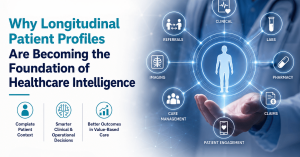
Today, providers have access to an unprecedented volume of healthcare data originating from multiple sources. Clinical documentation captures diagnoses and treatment plans. Administrative and claims data provide visibility into services delivered across organisations. Referral networks demonstrate how patients move through the continuum of care. Care management documentation records interventions outside the traditional clinical encounter, while patient engagement platforms and remote monitoring technologies provide insight after a visit has ended. Each source delivers information that represents more than individual records; it reflects the patient’s ongoing healthcare journey.
The Challenge Is No Longer Data Availability
Healthcare organisations rarely struggle because information does not exist. The greater challenge is ensuring information remains connected as patients move between care settings, providers, and programs.
A patient could receive care from a primary care physician, treatment from multiple consultants, services following hospitalisation, medication support from a pharmacy, and ongoing outreach from care management teams. Each interaction provides clinical and operational context, but they often originate from different workflows, systems, and organisations. Without a mechanism to preserve patient context, care teams spend time assembling information before they can determine the next appropriate action.
As healthcare emphasises outcomes over individual encounters, continuity becomes just as significant as connectivity.
From Records to Patient Context
Patients experience healthcare as a continuous journey; technology should reflect that continuity.
A longitudinal patient profile is more than a consolidated record. It is a representation of the patient’s health over time, enriched by every interaction across the care continuum, such as clinical observations, referrals, quality measures, claims activity, care coordination, patient-reported information, and engagement history.
This approach moves the focus from where information was created to how it contributes to the patient’s current condition.
Instead of navigating various applications to reconstruct a timeline, providers gain a comprehensive view that evolves as care progresses. The emphasis shifts from retrieving information to understanding relationships, identifying changes, and recognising opportunities.
For multidisciplinary teams, this shared understanding enhances collaboration as every participant works from the same clinical and operational context instead of separate pieces of information.
The Next Layer of Digital Transformation
As interoperability matures, healthcare organisations are evaluating technology differently. The conversation is shifting from whether systems can exchange information to whether they can preserve clinical context throughout the patient’s journey.
Equipo Health thinks this shift represents the rise of Healthcare Intelligence, which can transform clinical, operational, administrative, claims, and patient engagement information into meaningful patient context.
This enables organisations to identify patients requiring follow-up after hospital discharge, recognise emerging care gaps before quality measures are impacted, prioritise outreach based on changing clinical needs, coordinate referrals more effectively, and maintain visibility throughout complex care. Healthcare Intelligence provides a trusted foundation for informed decision-making.
Why This Matters
Value-based care measures success across the entire patient journey.
Organisations are expected to enhance quality, reinforce patient engagement, manage chronic conditions, minimise avoidable utilisation, and coordinate care across diverse provider networks. Achieving these objectives requires more than exchanging information between systems.
It requires maintaining a consistent understanding of each patient as their healthcare journey changes. When patient context is preserved over time, providers can better understand changing risks, previous interventions, outstanding care needs, and opportunities for earlier action.
Care managers can focus their outreach with greater precision. Physicians gain greater visibility into services delivered outside their immediate practice. Quality teams can monitor performance using information that reflects the patient’s complete experience, not just isolated encounters. The result is a more coordinated operating model, in which technology supports continuity instead of documenting activity.