The new approach examines the interplay between several factors of 3D bone printing
A new study has shown that the interplay of ink composition and printing design impacts the structure, strength and bioactivity of 3D-printed bone implants.
A new 3D printing approach that takes the structure, strength and bioactivity into account could help to better guide bone cell growth while maintaining stability and encouraging personalised treatment for bone repair.
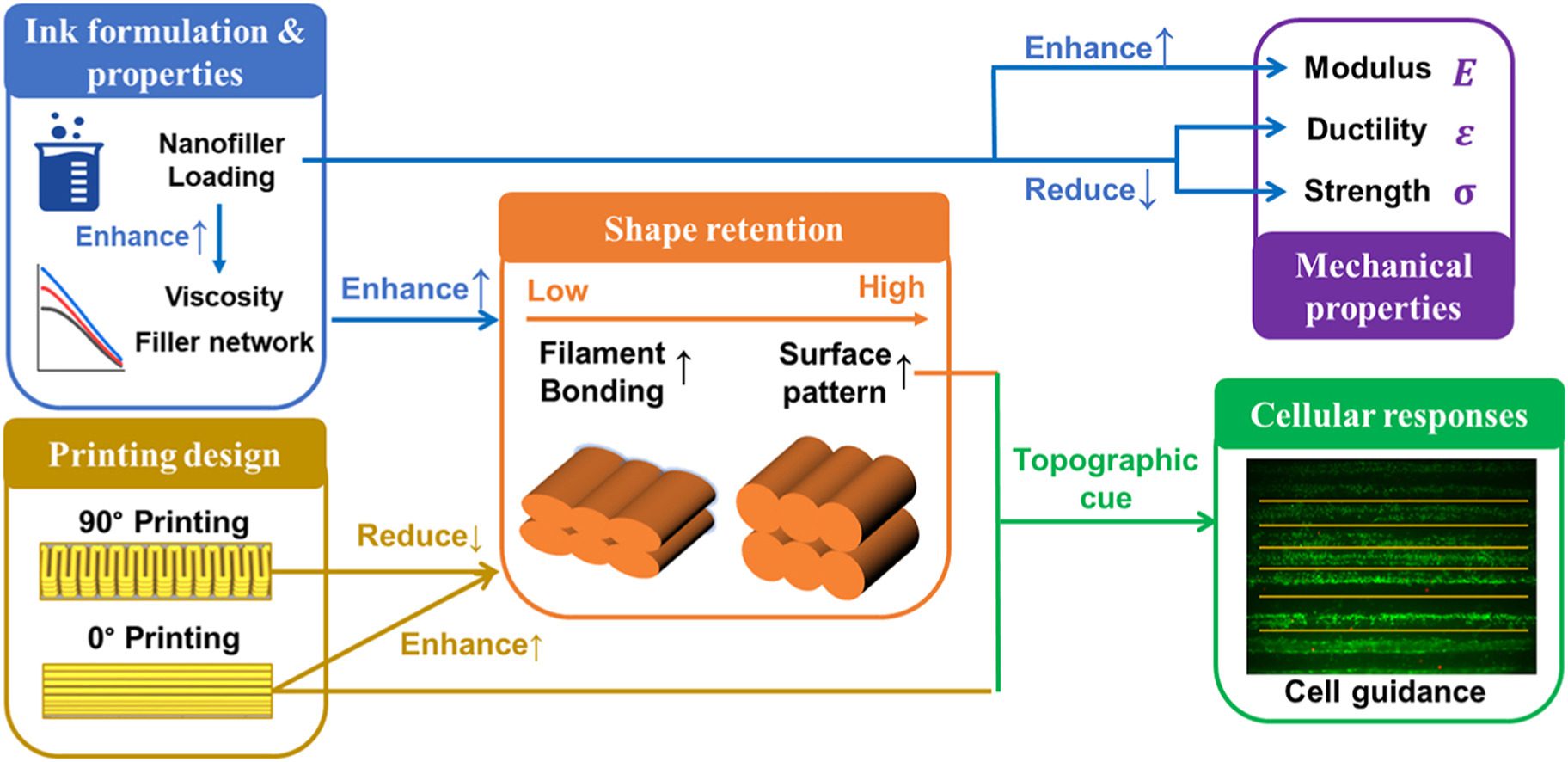
“What makes this study distinctive is that we didn’t just look at one factor in isolation,” said lead author Hongyi Chen from University College London. “By examining the interplay between ink composition, printing orientation, structure, mechanical behaviour, and cell response, we could see how design choices at each stage influence the final biological outcome.”
Traditionally, many 3D-printed scaffolds are porous and fragile. In the study, researchers used a technique called direct ink writing, which works at room temperature to print dense, solid implants that are mechanically stable while still supporting bone cells to grow and form new tissue.
One key finding in the study was that implants printed at different angles behaved in surprising ways.
“In fused deposition modelling, a common 3D printing method, printing filaments in the same direction as the applied force usually makes the implant stronger,” said Chen. “But with our approach, we found the opposite—implants printed at 90 degrees actually had better strength because the filaments bonded more effectively.”
Additionally, researchers added small laponite particles into the printing ink. Laponite is a nanoclay, which helped to make the ink thicker. The addition of laponite helped the printed shapes to hold their form while also releasing bioactive ions that encourage bone cells to attach and grow.
Implants with higher laponite content had a 110% increase in stiffness compared to pure polymer implants, and bone-forming cells on these implants showed greater proliferation and mineralisation over time.
The researchers’ next steps will involve exploring porous and more complex designs, as well as testing in preclinical models. If successful, the approach could enable patient-specific implants produced quickly in hospital labs or even at the point of care.