An experimental unit for space molecular crystallisation using gold nanostructure formation technology is being used to perform observation in space
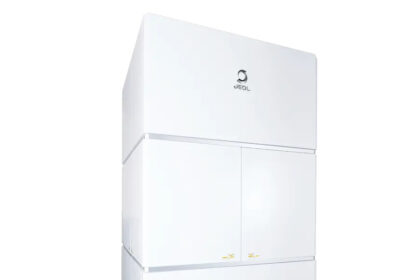
Tanaka Mirai Lab, part of Tanaka Precious Metal Group, has developed an experimental unit for space molecular crystallisation using gold (Au) nanostructure formation technology.
On April 21, 2025, the unit was installed in the SpaceX CRS-32, an unmanned commercial resupply spacecraft to the International Space Station (ISS), launched from the Kennedy Space Centre in the U.S.
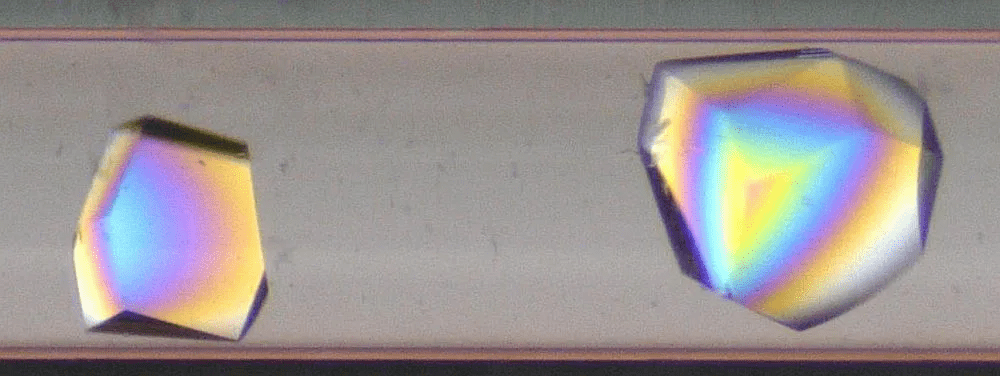
The unit was installed in the ISS's Columbus science laboratory, where it underwent one month of observation and experimentation before it was safely returned to Earth. After its return, it was confirmed that the experiments involving protein crystallisation in space were successful.
The experiment's significance
Protein crystallisation experiments conducted in space are essential for detailed structural analysis of protein molecules, as they can be done in a microgravity environment, eliminating the effects of gravity. It is expected that these experiments will make significant contributions to understanding biological functions and advancing drug discovery.
The low success rate of producing crystals, combined with the high costs and the limited number of experiments that can be conducted, continues to pose challenges for space-based research.
The unit utilises Au nanostructure formation technology and is expected to enable more cost-effective space experiments with improved outcomes.
Crystal generation rate can be significantly improved by leveraging protein crystallisation technology on the plasmon resonance of Au; it is this advancement that is predicted to contribute to the elucidation of biological functions and to research in drug discovery.
Superiority of "Experimental Unit for Space Molecular Crystallization Using Au Nanostructure Formation Technology"
The surface of Au nanoparticles easily absorbs protein molecules, and plasmon resonance occurs between Au nanoparticles at wavelengths in the visible light range, encouraging protein crystallisation.
Tanaka Mirai Lab discovered that the condensation of light energy between Au nanoparticles further promotes the generation of protein crystal nuclei. Additionally, in space's microgravity environment, crystals of higher quality and larger size are expected to be generated because they are not impacted by convection and sedimentation due to gravity.
In combination with Au nanostructure formation technology, Tanaka Mirai Lab has developed a capillary with high crystal generation capabilities for use in the counter-diffusion method.
On the inner wall of the capillary, nano-level particles of Au are aligned at nano-level intervals that facilitate the generation of plasmon resonance near the surface of Au particles.
The use of this unit is expected to improve the rate of obtaining protein crystals, which had been challenging, resulting in contributions to the elucidation of biological functions and the development of drug discovery research.
Takayuki Ishibashi, a chief researcher at Tanaka Mirai Lab, said: "Ever since Tanaka Mirai Lab was first launched, we've envisioned precious metals as being used in extreme environments. Many projects never get beyond their planning phases, so I'm ecstatic that our first success was with an experiment in space, and that we've been able to exhibit the actual articles used in the experiment in our concept room here within the company."
"Seeing the proteins that crystallised in space here on Earth, with my own eyes, I felt again the potential for future crystal applications as we work toward the year 2085. We were able to achieve this success thanks to the combined efforts of many people, and I'd like to express my gratitude again to all those involved, both inside and outside the company."
Masahiro Ito, a chief researcher at Tanaka Mirai Lab, said: "This space project was a tremendously meaningful one for us, as it represented a great step forward. As a company that deals with precious metals, there have long been expectations for our participation in the space industry, but this was our first time really taking on a challenge in this sector.
"The project started out of a desire not just to think about things at the conceptual level but to test them out in space. I believe it reflects the spirit of Tanaka Mirai Lab, harnessing curiosity to drive our pursuit of creating rare and exceptional value for the future."