Scientists can now rely on intestinal absorption, intestinal metabolism and hepatic clearance to estimate bioavailability
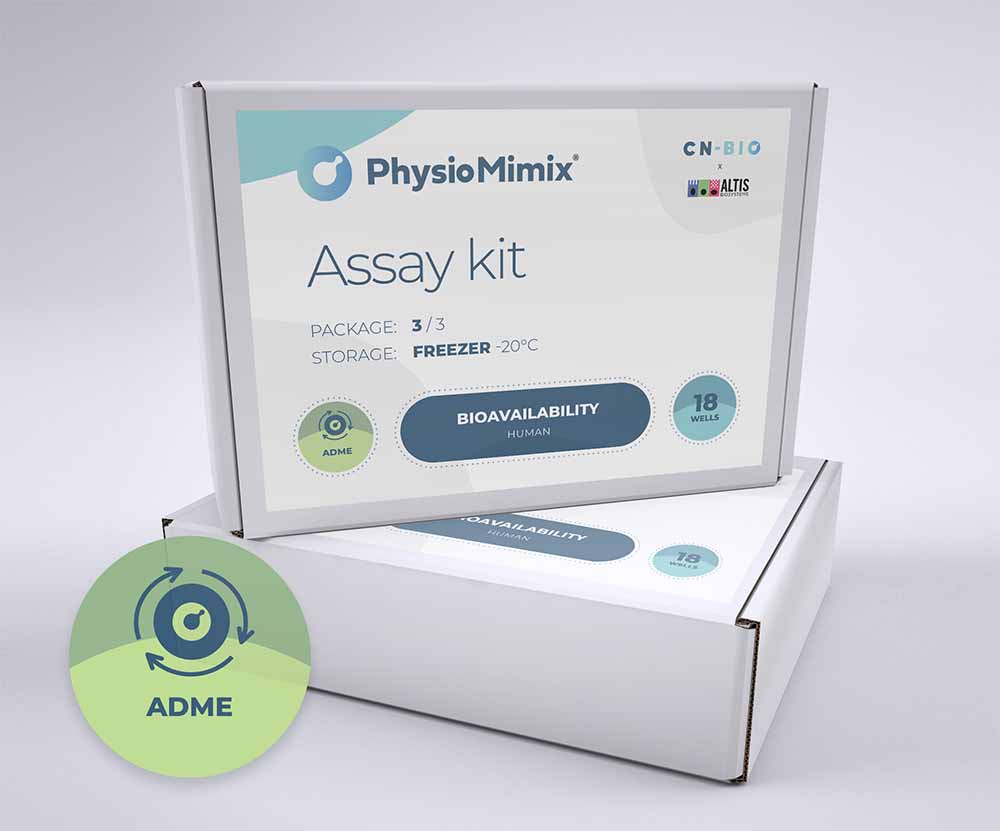
CN Bio, an organ on a chip (OOC) company that designs and manufactures single-and multi-organ micro physiological systems (MPS) has launched the PhysioMimix Bioavailability assay kit: Human 18.
The kit offers predictive insights into human oral bioavailability, enabling researchers to select and progress suitable candidates for drug development studies. Bioavailability is the extent to which a substance becomes completely available in its intended biological destination.
“Human bioavailability is a crucial part of choosing which drug candidates to progress to the clinic, but an area that is notoriously poorly served by existing models,” said CN Bio lead scientist Dr Yassen Abbas.
“The kit modernises workflows by removing the burden of assay development and validation, so researchers can rapidly onboard an OOC approach.”
The kit combines CN Bio’s liver-on-a-chip model with biotechnology company Altis Biosystems’ RepliGut Jejunum model, a series of intestinal stem cell (ISC)-derived cultures derived from organ transplant donors
Designed for use with CN Bio’s PhysioMimix Multi-organ System, the kit encourages accurate and predictive profiling of bioavailability earlier in the drug development process. The PhysioMimix assay has already been used by biotechnology company Inipharm in its Phase I trials studying non-alcoholic fatty liver disease.
The kit provides up to 18 replicates for scientists to profile drug candidates in vitro.
“Recognising the distinct market demand for new solutions to more accurately predict human bioavailability, we are pleased to be partnering with CN Bio to combine the benefits of our industry leading single-organ models into a perfused and metabolically capable liver-on-a-chip model.” said Altis Biosystems CEO Dr Ben Scruggs.
Currently, bioavailability is estimated by combining data sources such as in vitro assays, in vivo animal studies and in silico modelling. However, this allows for only a rough estimation, as these three sources have flaws when it comes to estimating human drug absorption.
In vitro and 2D cell cultures cannot accurately accommodate the complexity of drug absorption, and the physiological and metabolic differences between humans and animals is too great for results to translate completely to humans.
The kit minimises how much scientists must rely on less accurate estimations of animal, in vitro and 2D cell culture estimations.
“The Bioavailability assay kit: Human 18 allows users to harness the model’s capabilities from their own labs for the first time, providing a streamlined route to access predictive human data through an easy-to-use in vitro model,” said Scruggs.
Now, scientists can rely on measured processes such as intestinal absorption, intestinal metabolism and hepatic clearance.
Users can also simulate both intravenous and oral dosing routes, either separately or as a combined system.